




Supervisions and Colaborations
Supervisions
Socioecological determinants of the recovery of mammal fauna in post-war landscapes in Angola
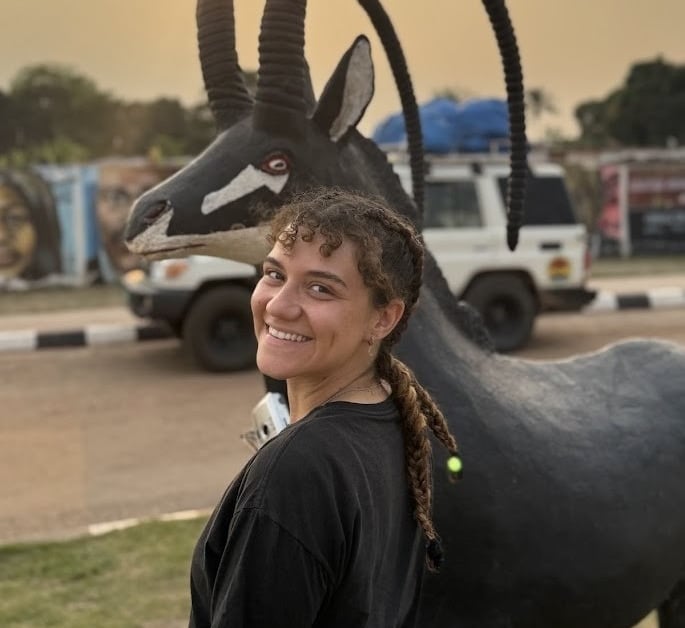
Bruna Medeiros Vieira Leal Siqueira
The project investigates how Angola's mammal fauna has recovered after the civil war, analyzing how landmines, former military bases, and surveillance influence mammal diversity, using thermal drones and interviews with local experts.
Projects
Dynamics of Wildlife Trafficking in Brazil: Spatial and Temporal Patterns Based on the SisCETAS Database.


Luíza de Almeida Cândido Vargas
The project analyzes data from IBAMA/SisCETAS to understand spatial and temporal patterns of wildlife trafficking in Brazil, identifying the most targeted species, socioeconomic and digital factors associated with trafficking, and causes of mortality in CETAS (Wildlife Rehabilitation Centers), aiming to improve management strategies and combat trafficking.
Projects
Characterization of the gut microbiome of Sylvicapra grimmia aiming at the detection of pathogenic microorganisms in fecal samples.
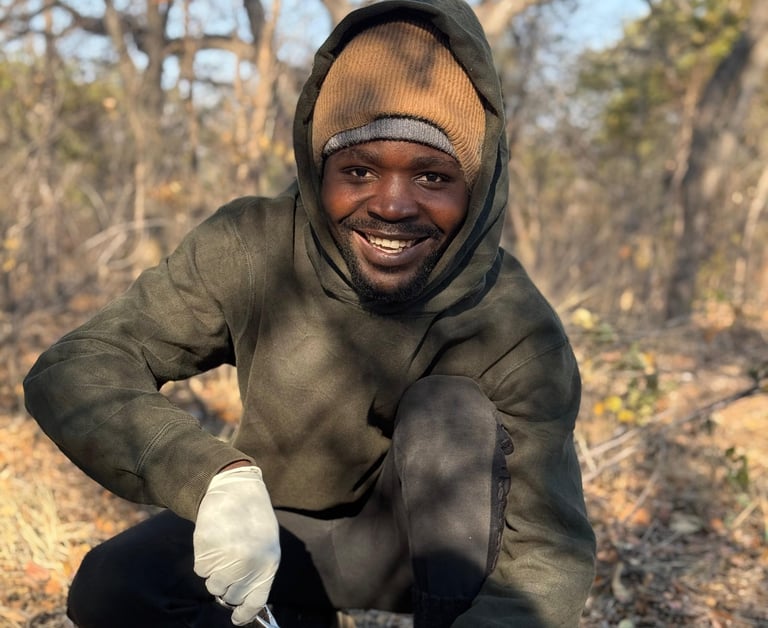
Orlando de Oliveira Mesa André Francisco
This project aims to characterize the gut microbiome of Sylvicapra grimmia (Bambi) and identify pathogenic microorganisms in fecal samples in order to assess public health risks.
Projects
Project for Assessing the Conflict between Humans and Elephants in Angola.


Juelma Lisandra Domingos dos Santos
This project addresses the problem of conflict between humans and elephants, which has intensified over the years in Africa, particularly in Angola. We seek to understand the true state of conflict in the different areas where forest elephants occur in Angola.
Projects
Colaborations
EXIT Research Group.
The EXIT Research Group is a research group that brings together researchers, professors, and students from diverse scientific fields, working collaboratively on topics related to environmental science, sustainability, ecology, and anthropogenic impacts on natural systems.
Colaborations


The Traveling Zoology Collection of the Federal University of Juiz de Fora (CIZ-UFJF) is a university extension project created in 2019 by Professor Renato C. Nali in conjunction with the Department of Zoology of the Institute of Biological Sciences (ICB). The project aims to democratize access to animal diversity, promote awareness of nature conservation, and demystify misconceptions about species. It focuses on environmental education, scientific dissemination, and the training of teachers and students.
CIZ – Coleção Itinerante de Zoologia da UFJF (Traveling Zoology Collection of UFJF).
Colaborations
RedeFauna - Research Network on Diversity, Conservation and Use of Amazonian Fauna.
RedeFauna is a collective formed by researchers linked to academic institutions, government agencies, and social organizations in Brazil, with recognized work in the conservation and management of Amazonian fauna, as well as the defense of rights related to traditional practices, such as subsistence hunting by indigenous peoples and traditional communities.
Colaborations
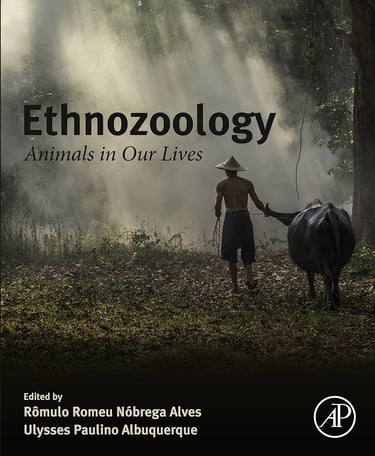
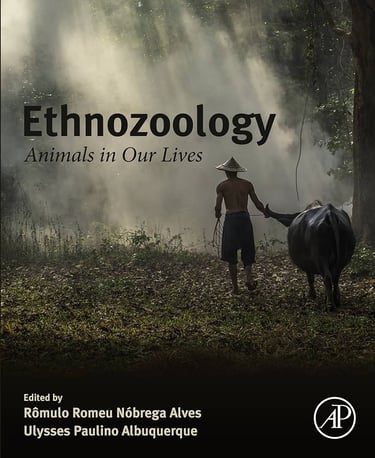
The Ethnozoology Laboratory at UFPB, led by Professor Rômulo Romeu da Nóbrega Alves, develops research focused on understanding the complex relationships between human societies and fauna, with an emphasis on the use, management, cultural perception, and conservation of animals in different sociocultural contexts.
The group has an extensive and internationally recognized scientific output, including reference books in the field, such as: Ethnozoology: Animals in Our Lives, published by Academic Press/Elsevier in 2018, which brings together chapters on different modes of interaction between humans and fauna in diverse cultural contexts and is widely cited in ethnobiology and conservation courses and research.
Furthermore, Professor Rômulo Alves was included in the list of the world's most influential scientists in 2025, placing him among the top 2% of scientists most cited globally in his field.
Ethnozoology Laboratory, UFPB.
Colaborations